Document Intake and Source Review Best Practices
Prepare clear source material, keep it connected to the case, and review important plan values before recommendation work begins.
What to bring into the case
Start with the material that explains the plan options and costs you are comparing. Typical sources include carrier quotes, rate sheets, SBCs, current invoices, benefit summaries, and spreadsheets.
- Use the original carrier document whenever it is available.
- Include the rate information that applies to the plan year being reviewed.
- Keep current, renewal, and alternative plan material identifiable.
Prepare files for a cleaner review
Legible, complete documents make source review easier. When possible, use digital files from the carrier system and include the pages that define deductibles, copays, network rules, premiums, contribution inputs, and other values that matter to the recommendation.
- Use the clearest available version of each document.
- Include document pages that show the relevant plan and rate details.
- Give uploaded files names that make their carrier, plan year, and purpose understandable.
Review the extracted case against the source
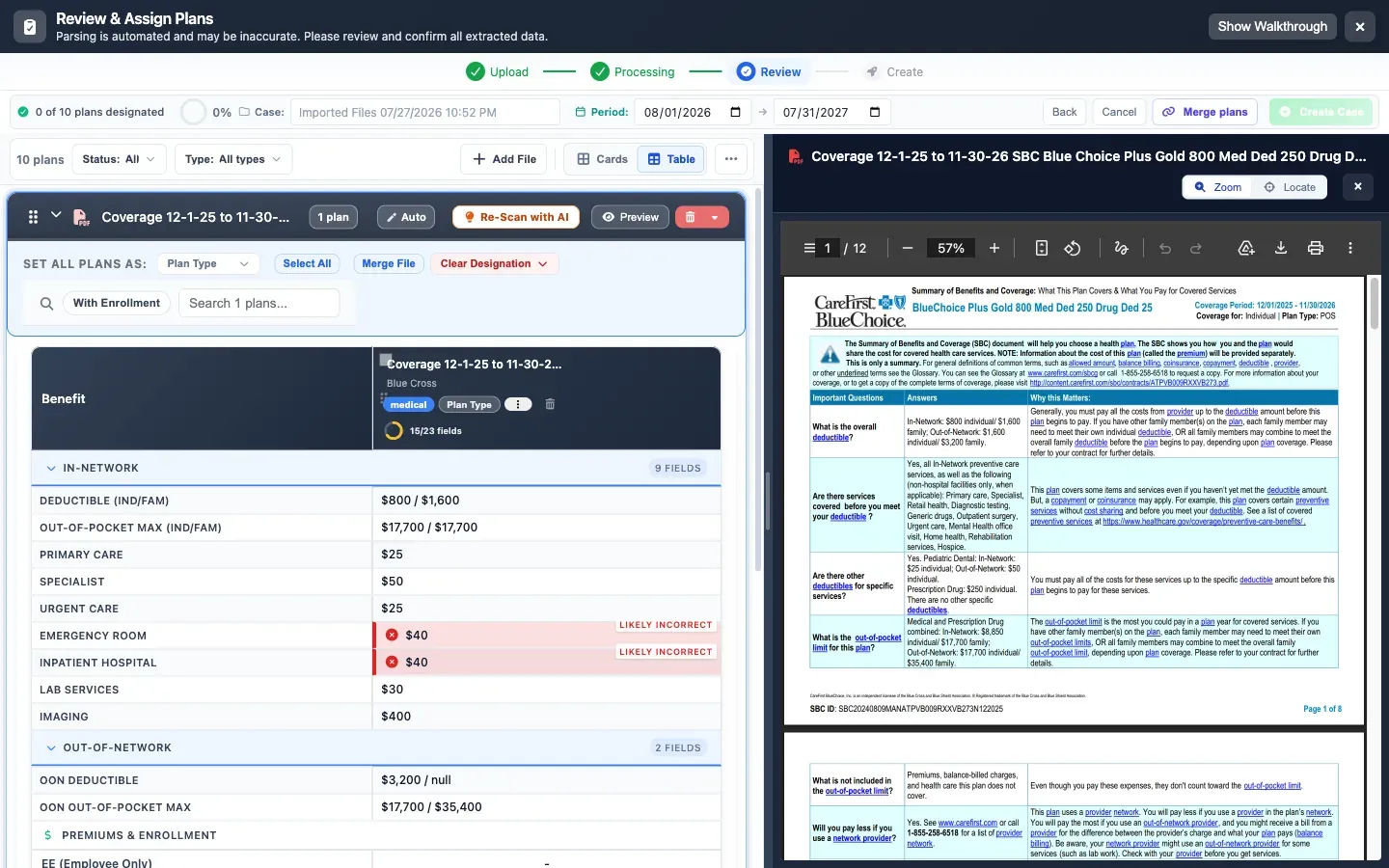
BART makes the source material available while you review plan data. Use that pairing to check the fields that drive the comparison and client-facing recommendation. Correct or confirm values before you begin modeling alternatives.
- Check benefit values against the carrier source.
- Verify rate and coverage-tier information.
- Confirm which plans belong in the current, renewal, and alternative views.
- Resolve questions before the case becomes the baseline for Scenario Manager.
Keep a clear handoff into recommendation work
Once the case is reviewed, it can become the baseline for Scenario Manager. That separation helps your team explore options in a safe working copy while preserving the source-verified case for comparison and future follow-up.
Start with a reviewable case
Bring carrier files and source verification into the same BART workflow.