Small Group vs Large Group Health Insurance
A comprehensive guide to the differences between small group and large group health insurance markets, including ACA requirements and rating rules.
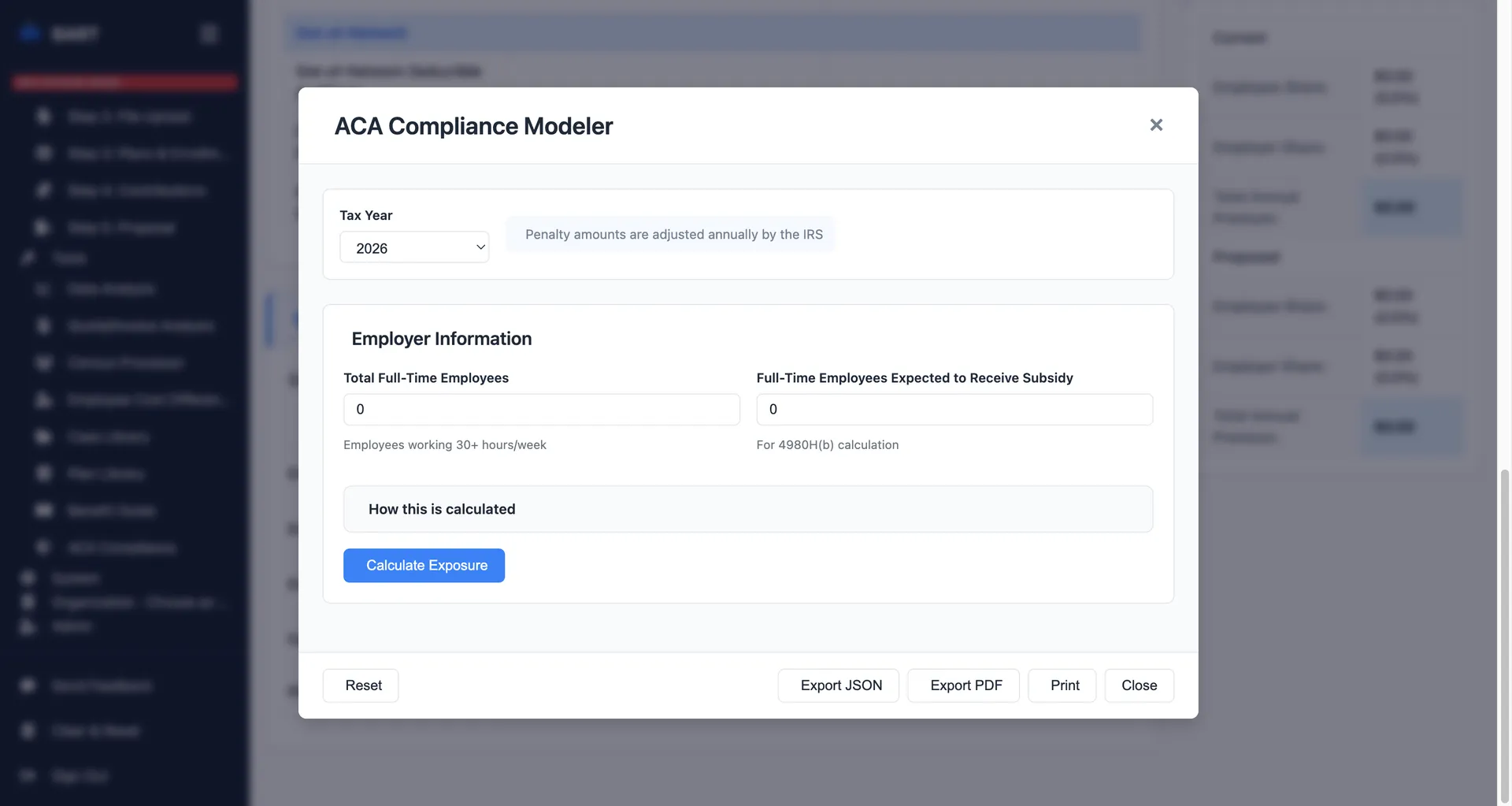
The line between small group and large group health insurance matters more than most employers realize. Where your client falls determines everything from how their rates are calculated to what benefits they must offer.
The 50-Employee Threshold
Under the Affordable Care Act (ACA), the magic number is 50 full-time equivalent employees (FTEs). This threshold determines:
- Whether the employer mandate applies
- Which rating rules govern their premiums
- What plan design requirements they face
- Their options for self-funding
Important: Some states define small group as up to 100 employees. Check your state's specific rules.
How Group Size is Calculated
Counting employees isn't as straightforward as it sounds. The ACA uses full-time equivalent (FTE) calculations:
- Full-time = 30+ hours per week (counted as 1.0)
- Part-time hours are aggregated and divided by 30
- Seasonal workers have special rules
- Calculate monthly and average across the year
Example FTE Calculation
Company has 40 full-time employees and 20 part-time employees working 60 hours/week total.
FTEs = 40 + (60 ÷ 30) = 40 + 2 = 42 FTEs
This company is considered small group (under 50).
Rating Rules: The Key Difference
Small Group: Community Rating
Small group rates can only vary based on:
- Age: Maximum 3:1 ratio (oldest to youngest)
- Geographic location: Rating areas set by state
- Tobacco use: Maximum 1.5:1 ratio
- Family size: Based on tier structure
Critically, claims history cannot affect small group rates. A group with high claims pays the same as a healthy group (adjusted for the factors above).
Large Group: Experience Rating
Large group rates can be based on:
- Actual claims experience
- Industry classification
- Group demographics
- Plan design choices
This means healthy large groups can negotiate better rates, while groups with high claims may see significant increases.
Plan Design Requirements
Small Group Requirements
- Must cover all 10 Essential Health Benefits
- Must offer plans in metal tiers (Bronze, Silver, Gold, Platinum)
- Guaranteed issue (cannot deny coverage)
- No pre-existing condition exclusions
- Dependent coverage to age 26
Large Group Flexibility
- Not required to follow metal tiers
- More flexibility in plan design
- Can offer custom networks
- More self-funding options
- Greater negotiating leverage
The Employer Mandate
Only Applicable Large Employers (ALEs)—those with 50+ FTEs—face the employer mandate:
- Must offer coverage to 95% of full-time employees
- Coverage must be "affordable" based on the IRS threshold for the applicable plan year
- Coverage must provide "minimum value" (60% actuarial value)
- Penalty A: ~$2,970/employee if no offer
- Penalty B: ~$4,460/employee receiving subsidized exchange coverage
Small groups have no mandate to offer coverage—it's purely voluntary.
Self-Funding Considerations
Both small and large groups can self-fund, but the dynamics differ:
Small Group Self-Funding
- Level-funded options increasingly popular
- Stop-loss critical due to less claims spread
- May avoid state mandates (ERISA preemption)
- More volatile year-to-year costs
Large Group Self-Funding
- Traditional self-funding more viable
- Better claims predictability
- More stop-loss options
- Greater potential savings
Comparison Table
| Factor | Small Group (1-50) | Large Group (51+) |
|---|---|---|
| Group Size | 1-50 FTEs (1-100 in some states) | 51+ FTEs (101+ in some states) |
| Rating Rules | Community rated (age, location, tobacco only) | Experience rated (claims history matters) |
| Essential Health Benefits | Required to cover all 10 EHBs | Not required (but most do) |
| Metal Tiers | Must offer Bronze, Silver, Gold, Platinum | No tier requirements |
| Medical Underwriting | Prohibited (guaranteed issue) | Allowed in some cases |
| Rate Variability | Limited by ACA (3:1 age bands) | More rate flexibility |
| Self-Funding | Possible but less common | Common option |
| Employer Mandate | None (under 50 FTEs) | Must offer coverage (50+ FTEs) |
Groups Near the Threshold
Companies hovering around 50 employees need careful planning:
- Growing toward 50: Consider timing of hires and how it affects your classification for the plan year
- Shrinking below 50: May lose large group rating advantages but gain small group protections
- Right at 50: Document FTE calculations carefully; audits happen
Key Takeaways
- The 50-FTE threshold triggers the employer mandate and different rating rules
- Small groups benefit from community rating (claims don't affect rates)
- Large groups have more flexibility but also more compliance obligations
- Self-funding is possible for both but works differently
- State laws may set different thresholds—know your jurisdiction
Compare Plans for Any Group Size
BART handles small group and large group comparisons with equal ease.