Analyzing benefit quotes is one of the most time-consuming yet critical tasks in a broker's workflow. A thorough quote analysis can uncover significant savings for clients and differentiate your services from competitors. This guide covers the systematic approach used by top-performing brokers to analyze quotes efficiently and accurately.
Why Systematic Quote Analysis Matters
Average savings found when comparing 5+ carriers
Time saved per case with structured analysis process
Close rate improvement with data-driven recommendations
The 6-Step Quote Analysis Process
Gather All Carrier Quotes
Collect quotes from multiple carriers in their original formats - PDFs, spreadsheets, or online portals.
- Request quotes from at least 3-5 carriers for competitive analysis
- Ensure all quotes use the same census data
- Note effective dates and rate guarantee periods
Normalize the Data
Convert all quotes to a consistent format for accurate comparison across carriers.
- Standardize tier structures (EE, EE+SP, EE+CH, FAM)
- Convert all rates to monthly premiums
- Account for different contribution methodologies
Compare Plan Designs
Analyze benefit levels beyond just premium costs to understand true value.
- Compare deductibles, out-of-pocket maximums, and copays
- Review network size and provider access
- Evaluate prescription drug coverage tiers
Calculate Total Employer Cost
Model different contribution scenarios to understand full financial impact.
- Factor in current enrollment distribution by tier
- Model employer vs employee cost splits
- Include ancillary benefits in total package cost
Identify Renewal vs New Business Rates
Understand rate changes and potential savings opportunities.
- Calculate year-over-year rate changes
- Highlight potential savings from carrier switching
- Note any first-year discounts or promotions
Build Your Recommendation
Synthesize analysis into clear, actionable recommendations for your client.
- Lead with 2-3 top recommendations
- Quantify savings in dollars and percentages
- Address plan design trade-offs clearly
Key Metrics to Track in Every Analysis
Premium Spread
Range between lowest and highest carrier quotes
Renewal vs Market
Current rates compared to competitive quotes
Plan Value Index
Premium cost relative to benefit richness
Employee Cost Impact
Per-paycheck change under each scenario
Employer Cost Change
Total annual cost difference from current
Common Quote Analysis Mistakes (And How to Avoid Them)
Comparing rates without normalizing tier structures
Ignoring network differences
Focusing only on premium costs
Not modeling employee impact
Presenting too many options
Tools That Streamline Quote Analysis
While spreadsheets have been the traditional tool for quote analysis, modern benefit administration platforms offer significant advantages:
Automated Data Extraction
AI-powered tools can extract rate data directly from carrier PDFs, eliminating manual data entry errors and saving hours per case.
Real-Time Contribution Modeling
Instantly see how different contribution strategies affect employer and employee costs across all quoted plans.
Side-by-Side Comparisons
Generate professional comparison charts that highlight key differences in plan design and costs.
Client-Ready Reports
Export analysis directly to branded proposals without recreating work in separate presentation tools.
Quote Analysis Best Practices Checklist
Related BART Features
Streamline Your Quote Analysis Workflow
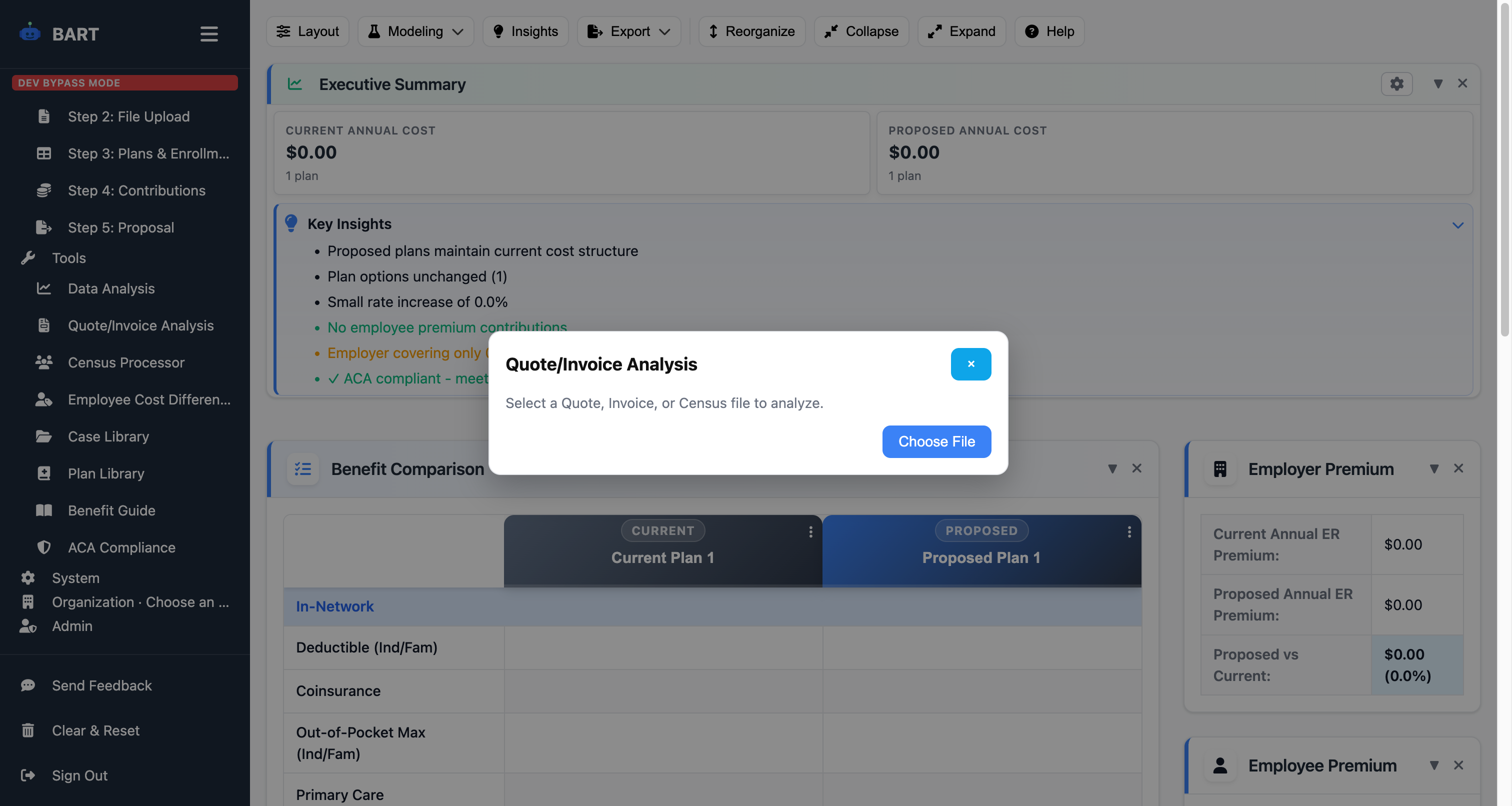
BART automates the tedious parts of quote analysis so you can focus on strategy and client relationships. Upload carrier quotes and get normalized comparisons in minutes, not hours.