Ancillary Benefits Strategy Guide
How to design and sell a complete benefits package that goes beyond medical—dental, vision, life, disability, and voluntary benefits.
Medical insurance gets most of the attention, but ancillary benefits often make the difference between a competitive package and a losing one. Smart brokers know that a well-designed ancillary strategy can win accounts, improve retention, and generate additional revenue.
Why Ancillary Benefits Matter
Ancillary benefits punch above their weight in several ways:
- Low cost, high impact: Dental/vision cost a fraction of medical but employees rank them highly
- Retention tool: Employees who use their benefits are less likely to leave
- Differentiation: When medical options are similar, ancillary can tip the scale
- Tax efficiency: Many ancillary benefits are pre-tax for employees
- Broker revenue: Ancillary commissions add up across a book of business
The Core Ancillary Package
Most employers offer some combination of these foundational benefits:
Dental Insurance
Nearly universal and highly valued. Key decisions include:
- PPO vs. DHMO: PPO offers flexibility, DHMO lowers costs
- Annual maximum: $1,000 is minimal; $1,500-2,000 is competitive
- Orthodontia: Important for families; typically 50% to a lifetime max
- Waiting periods: Can be waived for groups moving from another carrier
Vision Insurance
Low-cost, high-satisfaction benefit. Consider:
- Exam frequency: Annual exams are standard
- Frame/lens allowance: $100-200 is typical
- Contact lens coverage: Some plans are contacts-OR-glasses
- Discounts: Additional pairs, LASIK discounts add value
Basic Life & AD&D
Almost always employer-paid. Key considerations:
- Benefit amount: 1x salary is minimum; 2x is competitive
- Guaranteed issue: Amount available without medical questions
- Accelerated death benefit: Terminal illness provision
- Portability: Can employees keep coverage if they leave?
Disability Insurance
Often overlooked but critically important:
- STD: Typically covers 60% of income for 13-26 weeks
- LTD: Kicks in after STD, may last to age 65
- Definition of disability: Own occupation vs. any occupation
- Elimination period: Days before benefits begin
- Tax consideration: Employer-paid premiums = taxable benefits; employee-paid = tax-free benefits
Voluntary Benefits
Voluntary (employee-paid) benefits have grown significantly. These allow employers to offer more options without increasing costs:
Popular Voluntary Options
- Supplemental life: Beyond the basic employer-paid amount
- Accident insurance: Lump sum for injuries, popular with active employees
- Critical illness: Lump sum upon diagnosis of major conditions
- Hospital indemnity: Cash payments for hospital stays
- Identity theft: Growing concern, low cost
- Pet insurance: Surprisingly popular with certain demographics
- Legal services: Pre-paid legal plans
Voluntary Success Factors
Not all voluntary offerings succeed. Key factors include:
- Enrollment support: Active enrollment drives participation
- Payroll deduction: Must be easy to administer
- Communication: Employees need to understand the value
- Pricing: Reasonable rates matter
- Portability: Can employees keep coverage if they leave?
Bundling vs. Carve-Out
One strategic decision is whether to bundle ancillary with the medical carrier or carve out to specialty carriers:
Bundling Advantages
- Single bill, single contact
- Potential bundling discounts (5-15%)
- Integrated member experience
- Easier administration
Carve-Out Advantages
- Best-in-class specialty carriers
- Larger networks
- More competitive standalone pricing
- Flexibility at renewal
- Better claims experience (specialty focus)
Recommendation: Evaluate both options and let the numbers guide the decision. Don't assume bundling is always better—or worse.
Contribution Strategy
How employers fund ancillary benefits varies widely:
| Benefit | Employer-Paid | Offered By | Notes |
|---|---|---|---|
| Dental | 60-80% | 95% | Nearly universal, high employee value |
| Vision | 50-70% | 85% | Low cost, high satisfaction |
| Basic Life | 90%+ | 90% | Usually 1x-2x salary, employer-paid |
| STD | 70-80% | 75% | Critical for income protection |
| LTD | 60-70% | 70% | Often employer-paid for tax reasons |
| Voluntary Life | 0% | 60% | Employee-paid supplemental |
| Accident | 10-20% | 45% | Growing voluntary option |
| Critical Illness | 10-20% | 40% | Lump sum benefit |
Presenting Ancillary to Clients
When presenting ancillary options:
- Show the total package: Medical + ancillary = total compensation
- Quantify the value: "Dental adds $X per employee but prevents $Y in turnover"
- Benchmark against industry: What are competitors offering?
- Offer tiers: Good/better/best packages at different price points
- Address administration: Make it easy for HR
Renewal Strategy
Ancillary renewals are often auto-renewed without review. Smart brokers:
- Market ancillary alongside medical (even if medical stays)
- Review claims experience if available
- Check for network changes
- Evaluate new voluntary products
- Look for bundling opportunities
Key Takeaways
- Ancillary benefits are low-cost, high-impact additions to any package
- Dental and vision are nearly universal; life and disability are foundational
- Voluntary benefits expand options without employer cost
- Bundling vs. carve-out is situational—evaluate both
- Active enrollment drives voluntary participation
- Review ancillary at every renewal, not just medical
Compare Complete Benefits Packages
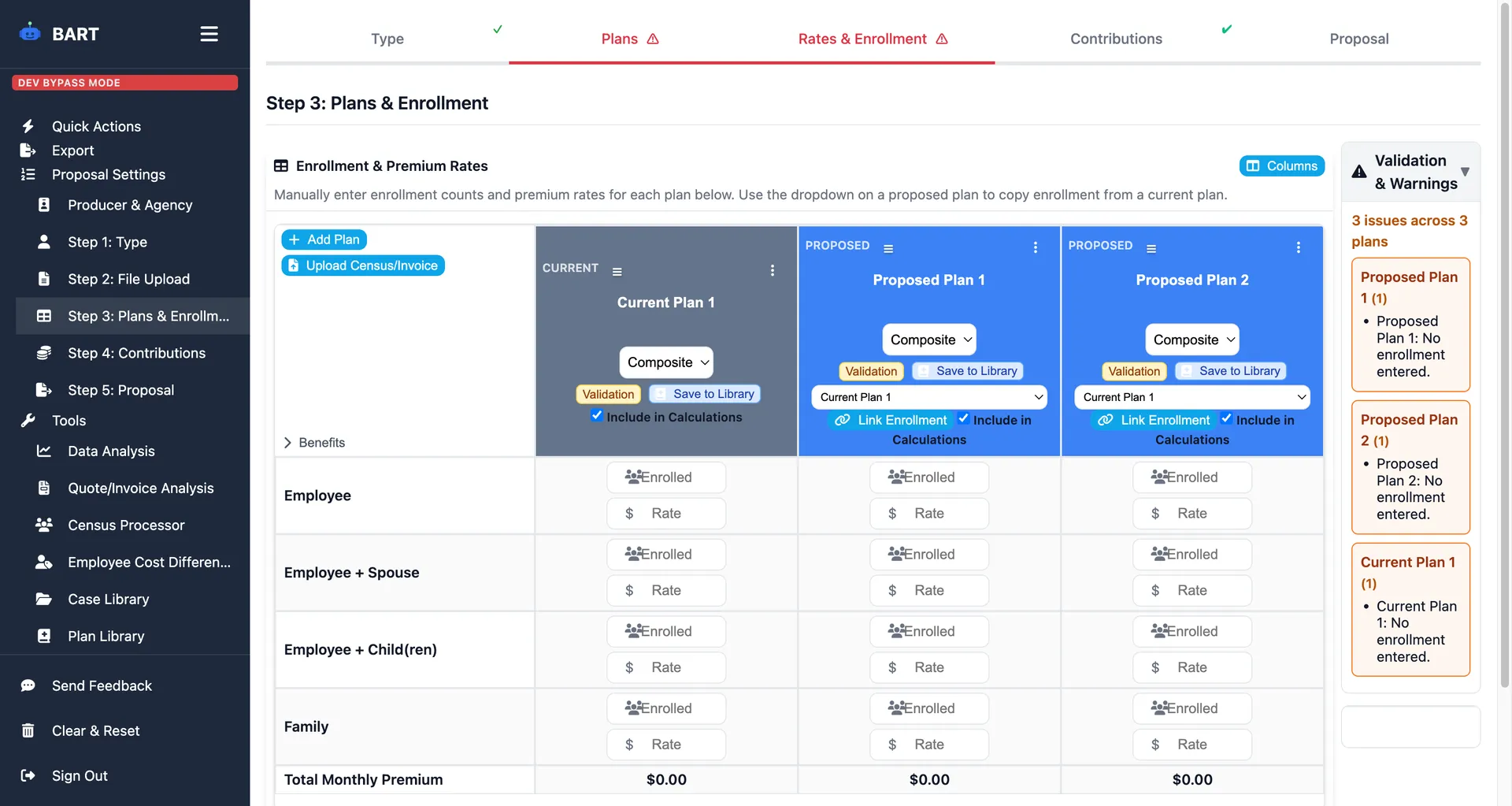
BART handles medical, dental, vision, life, and disability comparisons in one unified platform.